1to1 – Agency of Engagement

Supporting the positive change in how our South African cities are seen, made and managed.

  • Change by Design  – Joburg 2023

    Overview

    The 2023 CBD Workshop in Joburg was developed over many years of preparation with ASF-UK, 1to1 and various stakeholders across Johannesburg. My own doctoral research was tied into this process.

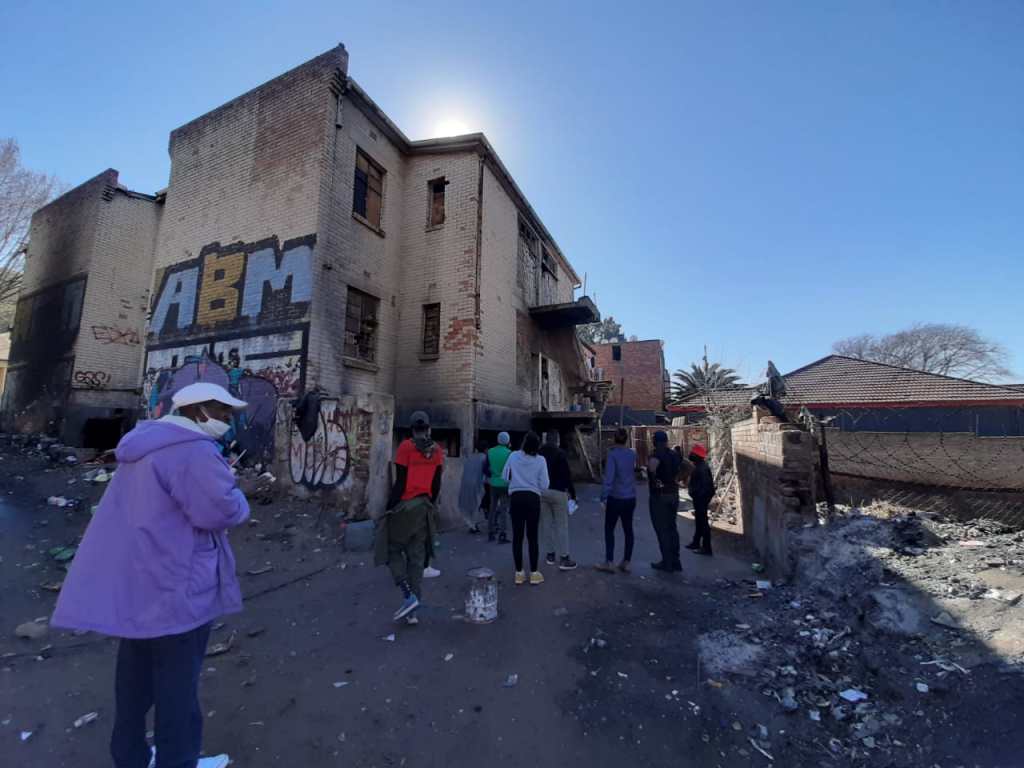
    The 2023 Change by Design – Joburg workshop delved into two distinct types of inner-city sites: an informal settlement and a cluster of informally occupied buildings. Leveraging the ongoing efforts and partnerships of 1to1 with advocacy groups and grassroots leadership, the aim was to bolster local residents and their organizations in creating equitable living conditions in the two areas.

    The workshop was divided into two parts: an online symposium for preparation, followed by a one-week live workshop culminating in a final event. The workshop aimed to comprehend the role of community-led design and planning in promoting housing justice in inner-city Johannesburg. The team believed that organized collective action was needed to advance the housing rights of inner-city residents and that community-led design and planning could support civic and grassroots actors in their housing justice work.

    The workshop utilized ASF-UK’s Change by Design methodology to encourage collaboration and mutual learning about urban space and improve local living conditions. The CBD methodology has four stages: diagnosis, dreaming, developing, and defining, with the workshop focusing on the first two stages. It also emphasized Ethics-in-Action, with a reflective approach to ethical practice and the importance of informed consent and data protection in research practice.

    The workshop’s sites, Bertrams and Jumpers, were chosen to facilitate comparative learning, with each site explored at the micro, meso, and macro scales to coordinate three groups of participants. The final event served as an important moment for various project stakeholders to come together, share insights, and collaborate on actionable next steps towards the project’s aims and needs.

    The workshop provided several recommendations for the future, including a focus on upgrading occupied buildings, addressing knowledge gaps around affordability and physical conditions, enhancing the capacity of grassroots activists, and promoting knowledge exchange beyond Johannesburg. The next steps involve implementing these recommendations to advance housing justice in Johannesburg, with a focus on policy dimensions around upgrading occupied buildings, addressing knowledge gaps in practice, enhancing grassroots activists’ capacity, and promoting knowledge exchange.

    Listen to our Community developed report summary here:


    Full Story (re-posted from CBD 2023 Website)

    In 2023, Architecture Sans Frontieres – United Kingdom (ASF-UK) and 1to1 – Agency of Engagement (1to1) led a multidisciplinary group of action-research volunteers to support local grassroots efforts in addressing housing challenges within the inner-city of Johannesburg through the Change by Design Methodology.

    Participants took part in a one-day online symposium in December 2022 and a one-week live workshop in Johannesburg in January 2023. Throughout this period, they worked closely with 1to1 – Agency of Engagement and their civil society partners, adapting the Change by Design methodology to explore how community-led design and planning can contribute to advancing housing justice in inner-city Johannesburg.

    The 2023 workshop explored two different types of inner-city sites: an informal settlements, and a cluster of informally occupied buildings. Building upon 1to1’s ongoing activities and partnerships with advocacy groups and grassroots leadership, the aim was to support local residents and their organisations in their efforts to create fairer living conditions in the two areas.

    The workshop was split into two parts: a preparatory online symposium, and one week live workshop that culminated in a final event.

    WORKSHOP AIMS

    The workshop aimed to understand the role of community-led design and planning in promoting housing justice in inner city Johannesburg. The project team and felt that inner city areas were places where housing deprivation and human rights violations are common and that there is a lack of understanding of the conditions and experiences of housing informality and precarity in these areas.

    They believed that community-led design and planning could support civic and grassroots actors in their housing justice work and that organised collective action was needed to advance the housing rights of inner city residents.

    The expected outcome of the workshop was to capture and amplify diverse experiences of housing informality in inner city Johannesburg, and the future aspirations of residents and their organisations.

    METHODOLOGY

    The workshop utilised ASF-UK’s Change by Design methodology to support collaboration and mutual learning about urban space and improve local living conditions. The CBD methodology has four stages: diagnosis, dreaming, developing, and defining. The initial stages are used to facilitate co-design activities at three scales: micro, meso, and macro. The 2023 workshop focused on the first two stages of the process (diagnosis and dreaming) and centred on two sites, Bertrams and Jumpers, to facilitate comparative learning. In each site, the micro, meso, and macro scales were used to guide and coordinate three groups of participants, each supported by ASF-UK/1to1’s facilitators.

    Diagram illustrating the stages and components of the Change by Design methodology for participatory design and planning (De Carli and Frediani:2021)

    CONSIDERED ETHICS-IN-ACTION

    The ethical standards and ethics board of institutions, organisations, and companies tend to focus on legal concerns around ethics or high-level moral principles. However, for the workshop, the focus is on Ethics-in-Action and navigating the complicated interpersonal dynamics that manifest in our work. The workshop outlined key concepts for a reflective approach to ethical practice, including being considerate of one’s presence in contexts of inequality and understanding positionality. It also highlighted the importance of informed consent and data protection in research practice. The document provides resources for further information on these topics and encourages ongoing reflection and learning.


    WORKSHOP CONTEXT

    INNER-CITY JOHANNESBURG

    The city of Johannesburg in South Africa was built in response to extractive industrial forces, with no clear origins, and is situated away from natural water resources. The city’s location was influenced by a meteor strike 2 billion years ago, which brought the gold seam closer to the surface. Johannesburg’s urban form was shaped by the mining belt, which split the city across an affluent-labour force divide. Johannesburg is one of the most unequal cities in the world. Even though the pass laws were revoked and the Apartheid State dismantled in 1994, endemic spatial inequality in South Africa remains.

    South Africa’s socio-economic inequality is a broadly discussed topic of research and public debate. However, socio-spatial inequality remains an elusive and collectively murky topic. Johannesburg was built before the Group Areas Act, but the separative patterns of labour, industry and housing put in place by both the Transvaal government and later British colonial forces preceded an urban structure that was later entrenched through the control of labour between the city centre, the townships and the rural homelands through the larger Apartheid system.

    The Apartheid City Model (Davies, 1989)

    The twentieth-century Apartheid city model, implemented by law, very specifically separated inhabitants and users along strict zoning and racial definitions as set out by city planners and mandated by the national government. Each adopted an internal core – a Central Business District (CBD)- that acted as a hub between industrial areas, outlying white neighbourhoods, and non-white townships and severely controlled access times, modes, and users. The model employed various natural and manmade ‘buffers’ to separate these areas that included industrial zones, rivers, mountains and, in the case of Johannesburg, the unusable mining extracted ore known locally as the ‘mine dumps’.

    BERTRAMS

    Bertrams is a suburb located on the eastern edge of Johannesburg’s CBD in South Africa. It is named after the property developer who bought the area in 1889. Bertrams is a warm and welcoming suburb, despite its high unemployment rate, and is situated near the University of Johannesburg. The housing in Bertrams ranges from fenced brick houses to apartment buildings, many of which serve as student accommodation.

    However, many of these buildings have not been well-maintained, causing health and safety hazards. The priority block, which is located between Gordon Road and Berea Road, consists of buildings occupied by groups of people who work together to maintain the cleanliness and liveability of their buildings. The land is owned by the municipality, with informal social tenure amongst the residents of the buildings.

    JUMPERS

    Jumpers is a small informal settlement located in Johannesburg’s Cleveland area, to the east of the CBD. The settlement is named after the Jumpers Deep Gold Mine which was established in 1898 and operated until 1913. Most of the people living in Jumpers reside in corrugated iron sheeting shacks, with some living in small brick homes or wooden board shacks.

    The settlement has community leaders, a creche, little shops, and bars for entertainment. People living in Jumpers commute to places like Sandton to work as domestic workers, gardeners, in supermarkets, or in taverns. The area is densely packed, with narrow walkways and gravel roads accessible by cars. The settlement has cuca shops where residents sell fruits, vegetables, and daily household items to make an income.

    WORKSHOP SUMMARY

    In December 2022, an online symposium was organized to support the upcoming 2023 Change by Design workshop in Johannesburg. The symposium aimed to bring together partners, stakeholders, and participants from the broad network, making participation easy and accessible. The symposium was split into two parts: the Workshop Participants Session and the Public Symposium. The Public Symposium had two panels, the first discussing the challenges faced by people living in informal settlements in the city and the second focusing on community-led design and planning agenda.

    On January 22, 2023, the 2023 Change by Design workshop began with an opening session, bringing together all participants to encourage reflection and engagement through a series of reflective questions. The following day, the workshop participants took a city tour that provided them with a rich and insightful experience, fostering a deeper appreciation of the challenges and opportunities that arise from designing for social change in the South African context.

    On Tuesday, the participants embarked on their first day of fieldwork in Jumpers and Bertrams. The experience highlighted the importance of understanding the social dynamics that underpin settlements like Jumpers and the need for a collaborative approach to designing interventions that can create positive change in these communities.

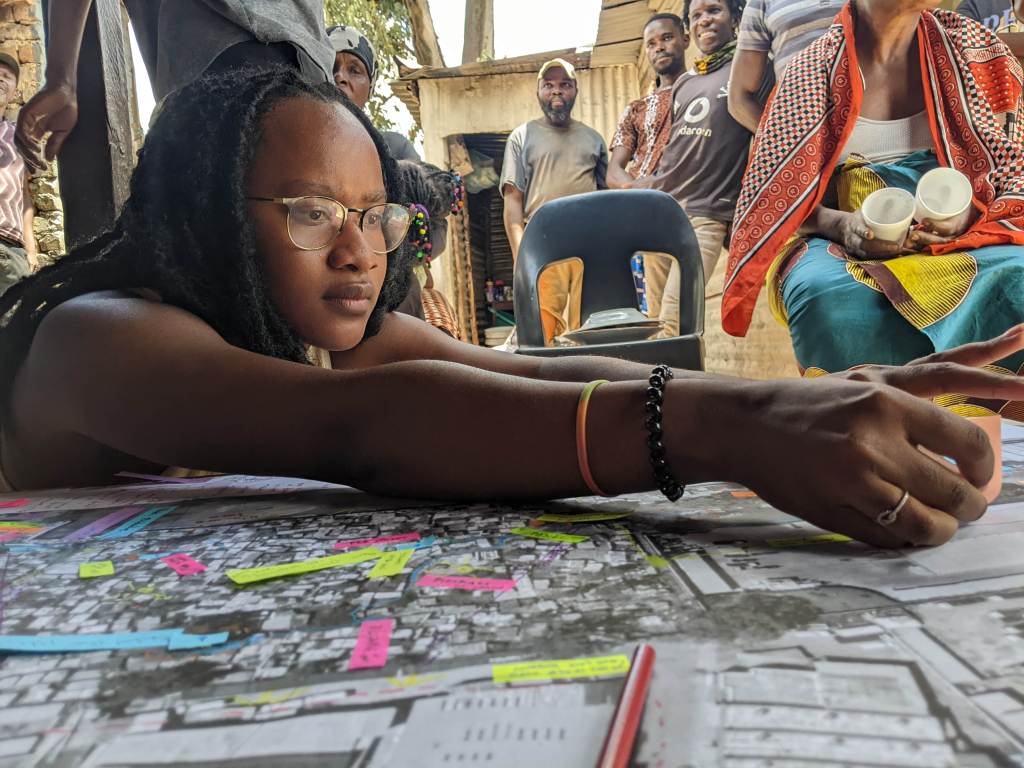
    The third continued the multi-scalar approach, focusing on the micro, meso, and macro levels of the sites to understand shared systems, spaces, and narratives.

    The fourth day was the final day of fieldwork, providing an opportunity to tie up any loose ends in the exercises and ensure that all participants were connected to the project’s future.

    The fifth and final event was an important moment for the workshop as various project stakeholders came together to creatively and collaboratively design actionable next steps towards the project’s aims and needs. The event was open to city officials, academic partners, NGOs, residents, and anyone interested in the project’s topics and was held at the School of Architecture and Planning in the University of the Witwatersrand’s John Moffat building.

    Overall, the final event was a crucial moment in the workshop as it provided space for various project stakeholders to come together, share insights, and collaborate on actionable next steps towards the project’s aims and needs.

    REFLECTION & WAY FORWARD

    WORKSHOP OUTCOMES

    The Change by Design 2023 Workshop was an important step towards addressing the complex challenges surrounding housing justice in Johannesburg, with a particular focus on inner-city informal settlements and occupied buildings. One of the key objectives of the workshop was to support community facilitators in their training skills and to help make and record the evidence of the work that various project partners have been doing for years. The workshop brought together stakeholders from various backgrounds, including grassroots networks, NGOs, academic institutions, and government officials, to collaborate and share knowledge.

    The workshop was organized into three main groups, each focusing on different scales of the sites in Bertrams and Jumpers. The groups explored a range of issues, including collaborative networks, multi-stakeholder approaches, and the difficulty of translating policy into practice. The lack of a policy for upgrading occupied buildings and limited options for community-led housing were identified as significant challenges. As a result, the workshop provided several recommendations for the future, including a focus on upgrading occupied buildings, addressing knowledge gaps around affordability and physical conditions, enhancing the capacity of grassroots activists, and promoting knowledge exchange beyond Johannesburg.

    The workshop also served as a platform for stakeholders to collaborate and share their experiences, strategies, and best practices. The event concluded with a presentation of initial work and an open discussion about potential ways forward for these sites. Attendees included representatives from grassroots networks, NGOs, and academic institutions. The workshop supported community facilitators in their training skills and helped make and record evidence of the work that various project partners have been doing for years. Overall, the workshop was an important step towards advancing housing justice in Johannesburg and promoting sustainable solutions for inner-city informal settlements and occupied buildings.

    NEXT STEPS

    The workshop brought together stakeholders to collaborate and share experiences, strategies, and best practices and supported community facilitators training. The next steps will involve building on this momentum and working collaboratively towards sustainable solutions for inner-city informal settlements and occupied buildings.

    The next steps following the Change by Design 2023 Workshop will involve implementing recommendations made between the project team in order to advance housing justice in Johannesburg, with a focus on policy dimensions around upgrading occupied buildings, addressing knowledge gaps in practice, enhancing grassroots activists’ capacity, and promoting knowledge exchange.

  • Covid-19 Lockdown Support

    Like many organisations in this sector, 1to1 has had to shift our traditional mode of socio-spatial support to respond to the changing needs of the people we work with and our project partners. In addition, the de-densification push by government was a major hurdle in this shifting lansdscape:

    Adi Kumar of DAG Explaining the difficulties of responding to the Lockdown

    This has included working with a host of new collaborators that include the Covid-19 Community Organizing Working Group – Gauteng amongst building deeper partnerships with our existing project partners through the Asivikalane campaign as well as connecting our databases to various other support networks that emerged during the Leve 5 – 1 lockdown in South Africa.

    A large part of this has been shift has been aligning our work to existing organizations who have been providing food parcels, mobilsing around sanitation issues and providing PPE’s, Sanitizer and working double time to stay in touch with project members, local leaders and residents in order to maintain a sense of collective connectedness in such disconnected times.

    1to1 team members with ICRC in Inner-City Joburg – Image:1to1

    1to1 worked closely with our project partners (SERI, PlanAct, ICRC and ICF), to not only provided this specific socio-technical support, but to build awareness around the people living in inner-city Johannesburg who were largely forgotten by the governmental Covid response.

    Process Diagram – Image:1to1

    A significant part of this work was to begin an advocacy process to allow those living in less-resourced part oft he inner city a similar recognition by the government through lobbying the Department of Human Settlements to push the City of Joburg to engage.

    Spatial database example – Image: 1to1

    Market Basket Support Work

    These last few months has seen 1to1 providing specialised socio-technical support to SERI in a project to assist Street Traders in inner City Johannesburg design spatial protocals for Covid 19 safe trading layouts.

    In this work set, 1to1 assisted SERI in their work with the City of Joburg in defending the spatial rights of the Street Traders in facilitating a series of discussions around the market baskets, spatial protocals and PPE allocation.

    Operation Micro-Fix

    1to1 began a series of micro-projects responding to local leader’s requests (after the City of Joburg was unable to respond) to assist in fixing taps, drains and some shared ablutions. This took place in Slovo Park as well as in the inner-city locations.

    1to1 designed ICRC Pamflet

    As per our practice ethos, 1to1 worked ith local artisans, leadership groups to co-make these micro-upgrades and supported with links to local funders, PPEs and socio-technical guidance.

    The Slovo Park Youth Group project began as small hand wash basin located athe Slovo Hall, and has now grown beyond a micro-project into a staged upgrade for an Early Childhood Development space a drop-off area for food parcels by the Youth Group, please support their project here:

    Giving Way Project – Slovo Park Youth Group

    Boundary of Home: Spatial implications of Covid19 Regulations

    In response to the Covid19 Lockdown Regulations, 1to1 produced a short informative document/insta story to expose the effects these rules were having on spatially disadvantaged homes in South Africa.

    The short narrative document was intended to outline the issues with the regulations, and how they were having an unfair impact on those living in higher density areas and how the interpretation of the regulations could be adapted to respond to this.

  • 1to1 Joins the Asivikelane Campaign!

    In support of the massive cross sectoral efforts working through the lockdown, 1to1 has recently joined the Asivikalane Campaign, the initiative:

    “…provides a platform for residents in informal settlements to communicate severe water, sanitation and refuse removal shortages during the Covid-19 crisis. It is a growing network that already brings together 153 informal settlements in five metropolitan municipalities and five smaller towns. 

    Aditya Kumar – M&G
    1to1 working through lockdown regulations Image: 1to1

    The Asivikalne Campign is an initiative of IBP South Africa, Planact, the SASDI Alliance, Afesis-corplan, DAG, SJC and Grassroot with funding provided by the European Union, Open Society Foundation, Luminate and Raith Foundation. By responding to three questions weekly about their access to water, clean toilets and waste removal, residents offer us a window into their daily experiences.

    M&G South Africa
    Image: M&G

    Aditya Kumar describes the campaign through the following points: “But we should not waste this crisis by only focusing on the short term. This is the precise moment to think further and address the matter of basic services once and for all. Here are five reasons why it is essential for the future: 

    • Firstly, access to water, decent sanitation and basic services is a constitutional right. It is enshrined in our Bill of Rights, section 27, which reads: “Everyone has the right to have access to sufficient food and water … The state must take reasonable legislative and other measures, within its available resources, to achieve the progressive realisation of these rights.” 
    • Secondly, this campaign is not just about services, but fundamentally about agency and voice. In our current paradigm, these are largely being determined by the patronage of local politicians and/or local government officials. Taps and toilets are frequently installed with no consultation or in areas that are either completely over serviced, or where they cater to the needs of a few. Through this campaign, citizens are voicing their concerns in the most evidential and direct manner. And as such, collectively holding all spheres of government accountable.
    • Thirdly, basic services are not simply a resourcing issue, but about prioritisation. The servicing of informal settlements and backyarders haven’t been given the priority they deserve. Each year, millions are underspent on grants to local government that are precisely there to service these areas. Where money is spent, substandard services are often installed because “these are for informal settlements”. 
    • This campaign highlights that we need to move beyond talking about simply dumping taps and toilets, but exploring new avenues for water and sanitation. Groundbreaking examples come from India, where communities run and manage facilities.
    • Fourth, the campaign isn’t just about demonstrating the gaps in service delivery, but sharing positive responses too. In many instances, the municipalities and metros are using this data to ensure that they respond urgently to the needs. Water tanks have been delivered in many metros, countless taps and toilets repaired and protective gear and sanitisers distributed to communities to clean communal toilets. Many of these examples highlight the dualistic role of the campaign — recognising improvements when they happen and improving service delivery. Ultimately this is not a monitoring and evaluation tool, but a platform for co-production and engagement.
    • Finally, the campaign is under no illusion that basic services will alleviate the root causes of poverty and inequality. But it definitely is a step towards restoring dignity to the millions living in extreme poverty. This effort needs to translate, with the support of civil society, into completely rethinking our ability to release well-located land, tenure security for the poor and an economic future that they can determine.”
    1to1 working through lockdown regulations Image: 1to

    Our project partners at Planact share the this important point:

    ” Over the past six weeks the Asivikelane campaign (“let’s protect each other” in Zulu) has reported that many residents still share communal toilets that are not regularly cleaned, queue for insufficient taps that are not repaired when they break, and tolerate refuse removal that depends on the whims of the truck driver. This endangers the lives of these residents daily, and during a pandemic, the lives of all South Africans.

    Nevertheless, the Covid-19 pandemic has suddenly catapulted the fate of informal residents to the top of local governments’ agendas. In the past weeks the department of human settlements has delivered 41,000 water tanks, and local governments has mostly found money to fill them.”

    Mike Makwala – Planact

    1to1 is underway with this work and looking forward to building on this collaboration and campaign with our partners.

  • Misereor Support

    1to1 has recently gained support from Misereor in the work we have been doing in inner-city Johannesburg. This support comes with a renewed collaboration with our partners in particular PlanAct, the Inner-City Resource Centre and SERI.

    Inner-City Johannesburg Project Image: 1to1

    Misereor supports many organisations in this sector, and 1to1 is very proud to accept this support and connect with such an established funder and their network:

    “The development projects supported by MISEREOR are as diverse as the causes and faces of poverty. They all have one thing in common, though. They all focus on the whole human person. As well as satisfying basic needs such as food security, they also help ensure that human rights are upheld and the way is paved for the people concerned to live in dignity.”

    Mission & Aim: Misereor

    The work we are being supported by through Miseroer focusses on in-situ upgrading of informal settlements (including multiple story building in inner-city Johannesburg) and larger aim to address the processes of engagement, upgrading and cross-sectoral communication between actors and agents in this region. This comes at an important time in the organization’s growth as we enter our next phase of organizational development as 1to1 2.0.

    We are looking forward to this partnership and welcome the support!

  • There’s no Such thing as a Community Centre

    Community Centres are traditionally seen as state provided facilities and are most typically, skills development centres or civic gathering spaces. In our experience we have also encountered many informal community centres, or semi-formal multi-purpose spaces used for political or civic gatherings. This investigation into the definition of a Community Centre and the measurability of a Community Centre’s ability to be a Community Centre was brought into focus during this research project. This research process was framed around three workshops, between which researchers would perform desktop and field work research to be discussed and unpacked in the workshops. 

    Read more about the project here:

    The Project

    The No Such Thing Project, is an initiative that we tested in this first installment, an action research project where a group of grassroots researchers and documenters explore and uncover whether or not there’s No Such Thing as a Community Centre. 

    The workshop guidebooks ready to be used. 

    The workshop

    The first workshop which was funded by the CTIN grant received by 1to1, served our needs to facilitate a shared learning experience between our researchers, who we identified via a social media call and by reaching out to youth activists in our network. 

    Ferdinand collecting post-its while we brainstormed themes for investigation

    We hosted a workshop at the Tshimologong Hub where we unpacked the theme of community centres with our researchers. We explored what the word Community means to us, and what Community Centre tends to imply. We then used our thinking around what we believe community centres should mean to declare a definition which we believe Community CEntres must meet in order to be classified as true community centres. We used post-its and poster papers to collect everyone’s ideas and to organize thoughts into themes, before consulting with the following:

     “a place/ space that supports and build the capacity of a group of people who are united in a common goal/aspiration in achieving that goal/aspiration”

    After this we introduced the themes we prepared beforehand, themes we thought might be relevant to researchers when studying community centres. We used discussions to uncover what everyone understood by the themes and our facilitation hoped to guide the conversations into a common understanding of each theme. This was still not easy as some of the themes were more familiar to the experienced researchers in our group while others had no experience talking about space or spatial qualities or even socio-economic ideas. Though this was challenging we believe that through discussing these themes during the workshop we clarified the meanings enough and by allowing researchers to work in groups in their research on the themes they could further support each other in understanding what was meant by each. 

    During the workshop it took some time for participants to warm up to the idea of writing their ideas on post-its, but by the third workshop everyone seemed fairly confident. They had also been in the project for two months by then, which means they knew their teammates and felt comfortable sharing their ideas in a bigger group. It takes time to build trust when people aren’t workshop fit. 

    A final activity saw us presenting some projects we imagined could be used as case studies by our research teams, to unpack this question of Community Centre-ness. Some of them were familiar to our researchers, and some not. SOme were added to the list based on the experiences of the researchers preset. We allowed folks to request which ones they hoped to investigate and allowed this to largely dictate the teams. 

    The research squad after all the hard work was done.

    Interesting things that came out of workshop 1

    1. A community is a group of people who share interests/aspirations and are engaged in action related to those mutual interests/aspirations. A community centre is thus a place where the capacity for this collective action is supported or capacity therefore is built. 
    2. Community Centres can be results of, places for or cause of conflict in communities. 

    Post Workshop

    After the workshop we processed the outcomes and used them to determine the trajectory for the research project, we divided researchers into teams based on geographic locations and interests and also tried to spread the skills in groups evenly. They mostly seemed happy and began doing research at desktop immediately. We hosted a follow up workshop with the researchers assigned the role of ‘documenter’ in teams, to formalise the way in which the research will be conducted. Thereafter the teams went to their various sites and a final workshop saw them presenting their findings to the other teams and evaluating the projects they studied according to a toll we developed, the Community Centre or Capacity Building Assessment Tool, CBAT for short. 

    Learning Takeaways

    It was ambitious to plan a big project like this with such limited resources, but the general feeling of the researchers seems to be that they enjoyed the process. Their inputs have been mostly far exceeding our expectations. It surprised us and we have definitely learnt that research can be done with people not trained as researchers and that often local knowledge and experiences are excluded from these topics and they merely need the right platform for these contributions to be uncovered. It was also great to see how people who arrived as strangers, managed to make time to work together, without a formal workshop being arranged, to produce work. They shared their own experiences and learned from each other about much more than the case studies.

    Summaries

  • 1to1 2.0 – a new chapter

    A brief history of 1to1:

    1to1 began in 2010 when a group of students from a South African university were given an opportunity to work with the residents and leadership of Slovo Park, the Slovo Park Development Forum, as part of their masters in architecture programme.

    During the initial project of co-designing and co-building a small tactical intervention in Slovo Park, the Slovo Hall, the group were exposed to another way of working and city-making, as people first then as practitioners – they sought to grow this additional mode of practice into something that could support similar projects while creating a platform for engagement with other stakeholders and students. This initial student group went on to develop the 1to1 Student Group into 1to1 – Agency of Engagement and register the organisation in 2012 as legal entity.

    A new direction

    Since 2010, 1to1 has grown, reflected and adapted through a shift in our operating model from a sole civic/academic entity into a more hybrid social enterprise. Supported by the Ashoka Social Entrepreneurship Network and our tactical collaborators (Architecture Sans-Frontieres-UK & the University of Johannesburg’s Faculty of Art, Design & Architecture) the organisation has changed and pivoted as the original founders and collaborators have grown to understand and learn how to tactically and systemically address Spatial Inequality in South Africa in a more resilient and sustainable manner.

    We have re-branded 1to1 to reflect our new approach, leadership and structuring of the organisation and will be adopting a brand new logo designed in-house:

    1to1 Logo re-design by Suzette van Der Walt (original by Yolandi Vorster)

    We have moved from our home at The Point and moved into the Maths Centre at 28 Juta Street in Braamofntein, where we share offices with a range of NGO’s and civil practitioner groups. Braamfontein is a very special part of Johannesburg and we are proud to be a part of this dynamic neighborhood.

    Maths Centre, 28 Juta Street, Braamfontein, Johannesburg

    Of the big changes; we say goodbye to Jhono Bennett as our leading director of 1to1, as he will be pursing his doctoral studies (while supporting 1to1 as an advisor) and welcome back Jacqueline Cuyler (1to1 co-founder and co-director) to take up the leadership role for the organisation. Jacqui will be guiding 1to1 towards a more grounded, and focused approach to our social impact goals and bringing on board her wealth of experience her work in the Congo and across Southern Africa.

    Jacqueline (Casson) Cuyler: our new Organisation Lead for 1to1

    1to1 will be adapting the organization more closely into a social enterprise venture, and will be shifting many of our practices structures to achieve this, in support of this goal we have completely reformed our Advisory Board and welcome our new board to our team:

    OUR NEW OPERATIONS TEAM

    Dumisani Mathebula

    Socio-Technical Practitioner

    Mduduzi Ntongana

    Socio-Technical Practitioner

    NEW PROJECT PARTNERS
    CONTINUING PROJECT PARTNERS
    OUR NEW ADVISORY BOARD

    Dr. Geci Karuri-Sebina is a Johannesburg-based scholar-practitioner who mainly works on urban planning and governance issues. She is currently currently an Associate of South African Cities Network, Visiting Research Fellow with the Wits School of Governance, and National Organiser of the Civic Tech Innovation Network in South Africa. She is also a Global Faculty member of Singularity University. Geci’s experience and interests span a range of development foresight, policy, innovation and practice topics, particularly relating to cities and local systems. She has two decades’ experience working and publishing in these fields.

    Aditya Kumar is the Executive Director of DAG. Previously, Adi worked as the Deputy Director at Community Organisation Resource Centre. Over the last fifteen years, he has worked on post disaster, post conflict and informal settlement upgrading across the world. His practice focuses on inter-sectoral partnerships, strengthening community action and housing policy.

    Lebogang Luvuno A passion for transformation and socio-economic development has led Lebogang to work with a range of companies from large multi-nationals to smaller local companies (first as an employee and then as a consultant). Lebogang also has experience in the NPO sector, having been involved in several projects that focused primarily on youth development over the past fifteen years. Lebogang’s company, Motopi Consulting, has impacted 2 million lives in its 8 years of operation

    Jhono Bennett is a co-founder of 1to1 and is currently enrolled at the Bartlett School of Architecture as a doctoral candidate in the TACK / Communities of Tacit Knowledge: Architecture and its Ways of Knowing network. In addition, Jhono is an Ashoka Social Entrepreneurship Fellow as well as an Alumni of the Mandela Washington Young (MWF) African Leadership Initiative (YALI) Fellowship. Jhono led 1to1 in its first iteration as a non-profit entity from 2012-2019, and now supports the organisation as an advisor.

    WHAT IS 1TO1 WORKING TOWARDS?

    1to1 has grown from a small student based group in 2010, into an adaptive, collaborative and resilient social-enterprise that will continue to work towards its social impact goals of supporting the positive change in how South African cities are seen, made and managed through our guiding founding principles of criticalityconstructivity & empathy.

    Watch this space 😉

  • A Reflective Engagement: 2010-2018

    As a means of handing over, reflecting and trying to make sense of the last 8 years we have put together a reflective report that we hope will capture and share the experience for other practitioners, our supporters and the people who have joined us so far. (Link here: https://issuu.com/1to1_enyekwenye/docs/1to1_a_reflective_engagement_snglep)

    The report is intended to offer a critical take on what we as 1to1 have done since we started, while celebrating the small wins, recognising the various  people who have made this possible and charting a new path towards a more resilient and effective organisation.

    1to1_A Reflective Engagement_spreads large_Page_03
    1to1_A Reflective Engagement_spreads large_Page_07
    1to1_A Reflective Engagement_spreads large_Page_08

    The report additionally serves as a record of our work and where we began. We tried to frame 1to1 in this moment, as we prepare to shift and change under new leadership and a more focussed view on the future.

    1to1_A Reflective Engagement_spreads large_Page_09
    1to1_A Reflective Engagement_spreads large_Page_11
    1to1_A Reflective Engagement_spreads large_Page_18
    1to1_A Reflective Engagement_spreads large_Page_22
    1to1_A Reflective Engagement_spreads large_Page_23

    We archived and recorded all our projects, our partners and offered a retrospective view on the ‘impact’ that we felt held merit and should be re-examined in 1to1 2.0.

    1to1_A Reflective Engagement_spreads large_Page_26
    1to1_A Reflective Engagement_spreads large_Page_27
    1to1_A Reflective Engagement_spreads large_Page_28
    1to1_A Reflective Engagement_spreads large_Page_29

    Finally we looked hard at the pitfalls and successes of the organisation and asked the hard questions within ourselves – should we keep the entity alive?

    1to1_A Reflective Engagement_spreads large_Page_31

    This document bears record of every person who has made an active contribution to 1to1 and hopefully sets down the first step towards a better, more resilient organisation.